
Your AI Agents Are Already in Production — Just Without IT Knowing
80.9% of technical teams have already pushed AI agents into active testing or production, but only 14.4% of those went live with full security or IT approval. Here's what that gap actually costs you.
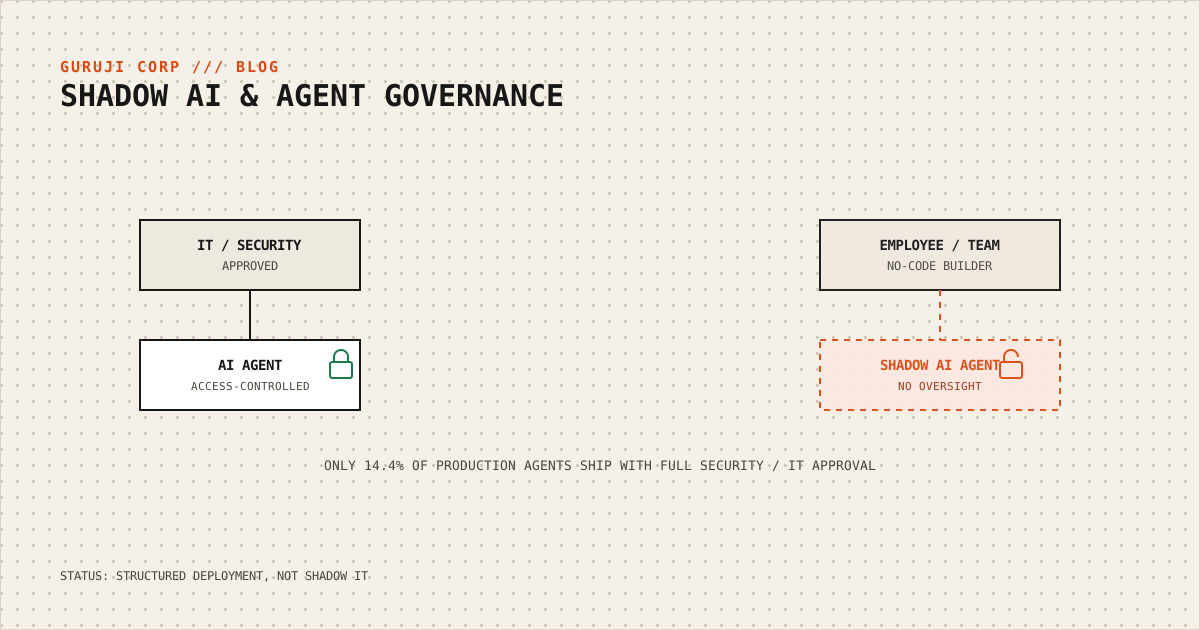
Every org chart now has a branch nobody drew.
Recent industry research on enterprise AI agent security puts a number on something most engineering leads already suspect: 80.9% of technical teams have pushed an AI agent into active testing or production, but only 14.4% of those agents went live with full security or IT approval. The rest were built by a team, in a no-code tool, connected to real systems, with real access — and nobody with security responsibility signed off.
There's a name for this now: shadow AI. It's the same pattern as shadow IT a decade ago (someone spins up a spreadsheet macro, a personal Dropbox, an unsanctioned SaaS tool), except this time the thing being spun up can read your CRM, send messages on your behalf, and call other tools autonomously.
Why this happens even in careful companies
It's not recklessness. It's speed mismatch. A no-code agent builder lets a sales-ops person automate a lead-routing workflow in an afternoon. Getting that same workflow reviewed, access-scoped, and approved through a normal IT process can take weeks. Given that gap, most teams don't wait — they ship, and plan to "get it reviewed later." Later rarely comes.
The result, per the same research: only 21.9% of teams treat AI agents as independent, identity-bearing entities with their own scoped credentials. Nearly half still rely on shared API keys for agent-to-agent authentication — meaning if one agent's key leaks, every system connected through it is exposed at once.
What "doing it right" actually looks like
None of this requires slowing down to a crawl. It requires treating an agent the way you'd treat a new hire, not a script:
- A scoped identity per agent — not a shared key borrowed from three other integrations.
- Explicit tool permissions — an agent that reads support tickets shouldn't also have write access to your billing system, just because it was convenient to reuse one API key.
- An audit trail — every tool call an agent makes should be logged the same way you'd log an admin action, so "what did the agent actually do" is answerable after the fact, not a guess.
- A named owner — someone whose job it is to know which agents are running, not "whoever built it originally, if they still work here."
Where Guruji Corporation fits in
This is precisely the gap between a weekend automation and a system a business can actually depend on. When we build agent-based automation for clients — whether it's a WhatsApp intake bot, an internal ticket router, or a document-processing pipeline — access control and audit logging aren't an add-on we bolt on after a client asks; they're part of how the system is designed from the first architecture conversation.
If you already have a few of these "someone built it in an afternoon" agents running inside your business, the cheapest time to get them reviewed and properly scoped is now, before one of them touches something it shouldn't. Talk to us about an agent security review — we'll tell you honestly if what you have is fine, or if it needs rebuilding.
Sources
Want to see how we can build your project?
Send us your project outline or chat directly on WhatsApp.